The smartphone camera, a device once considered a secondary feature, has evolved into a central pillar of mobile technology. As 2025 approaches, the trajectory of this evolution suggests a deeper integration of advanced computational photography, refined hardware, and a growing emphasis on specialized photographic roles within a single device. This article examines the prevailing trends and anticipated developments in smartphone cameras for the year 2025, offering insights into the technological landscape that awaits users.
Computational photography, often operating as a silent partner within the smartphone, will continue its reign as the primary driver of image quality improvements. No longer a mere post-processing step, it will become an indelible part of the capture process, reshaping how light is interpreted and rendered.
Further Refinements in HDR and Dynamic Range
High Dynamic Range (HDR) techniques, already sophisticated, will see further refinement. Expect algorithms to achieve even more nuanced balancing of extreme highlights and shadows, particularly in challenging scenarios like backlit portraits or high-contrast landscapes. The goal is to move beyond the sometimes artificial “HDR look” towards a truly natural representation of the scene’s luminance range, mirroring the human eye’s capabilities more closely. This involves a deeper understanding of scene content and semantic segmentation, allowing for localized adjustments that are highly precise. Consider the dynamic range as an elastic band – in 2025, that band will be stretched further without snapping, resulting in a wider usable tonal spectrum.
The Rise of Generative AI in Image Processing
While still in nascent stages, generative AI models will begin to play a more prominent role beyond stylistic filters. These models could analyze a scene and, leveraging vast datasets, intelligently reconstruct missing details, enhance textures, or even subtly alter lighting to achieve a desired aesthetic. For instance, in low-light conditions, generative AI might not just denoise an image but reconstruct fine details that were not adequately captured by the sensor, moving beyond traditional interpolation to a more intelligent synthesis. This means the camera is no longer just a recorder of photons but an active participant in shaping the visual narrative.
Enhanced Semantic Understanding for Smarter Processing
Future computational photography will be underpinned by an even deeper semantic understanding of the scene. The camera will not merely recognize “people” or “sky,” but specific elements within those categories. This granular understanding will enable more intelligent and context-aware adjustments. Imagine a scenario where the camera differentiates between a wedding dress and a casual garment, applying tailored processing that optimizes texture and color rendition for each. This level of nuance will move computational photography from a general enhancer to a highly specialized visual artisan.
As we look ahead to the future of smartphone cameras in 2025, it’s interesting to explore how advancements in technology will shape photography and videography. A related article that delves into the impact of artificial intelligence on creative processes is titled “AI Content Creation Tools: Enhancing Productivity Without Losing Your Voice.” This piece discusses the integration of AI in various creative fields, which could also influence how smartphone cameras evolve to assist users in capturing stunning images and videos. For more insights, you can read the article [here](https://jdg.agency/2025/04/21/ai-content-creation-tools-enhancing-productivity-without-losing-your-voice/).
Camera Hardware: Pushing Physical Boundaries and Miniaturization
While software takes center stage, the underlying hardware continues its relentless march of progress, pushing the boundaries of what is physically possible within the confines of a thin smartphone chassis.
Larger Sensors and Advanced Pixel Technologies
The trend towards larger image sensors will continue, although perhaps with diminishing returns in terms of physical size due to device constraints. However, advancements in pixel technology will compensate for any limitations in sensor growth. Expect to see more sophisticated quad-bayer or nona-bayer arrangements that offer greater light-gathering capabilities and improved dynamic range. The emphasis will shift not just to the size of the sensor but also to the efficiency of each individual pixel, akin to optimizing the light-collecting capabilities of countless tiny funnels. Multi-layer sensor designs, similar to those found in mirrorless cameras, may also see increased adoption, allowing for improved noise reduction and faster readout speeds.
Variable Aperture and Optical Zoom Systems
Variable aperture, a feature currently found in a few high-end models, will likely become more prevalent, offering greater control over depth of field and light intake. This allows the camera to adapt more dynamically to various lighting conditions, mimicking the flexibility of traditional camera lenses. Furthermore, advanced periscope zoom systems will continue to evolve, offering longer optical zoom ranges without a significant increase in module thickness. The integration of more sophisticated OIS (Optical Image Stabilization) capable of compensating for larger movements, particularly at extended focal lengths, will be crucial. Think of the optical zoom as a telescope – in 2025, it will be able to magnify further with less image degradation.
Next-Generation Lens Materials and Coatings
Research into new lens materials, including meta-surfaces and liquid lenses, holds promise for reducing lens element count, improving optical clarity, and even enabling faster autofocus. Enhanced anti-reflective coatings will become standard, reducing flare and ghosting, and allowing more light to reach the sensor effectively. The goal is to create lenses that are not only compact but also optically superior, acting as pristine windows for the light to enter.
The Multi-Camera Array: A Symphony of Specialized Lenses
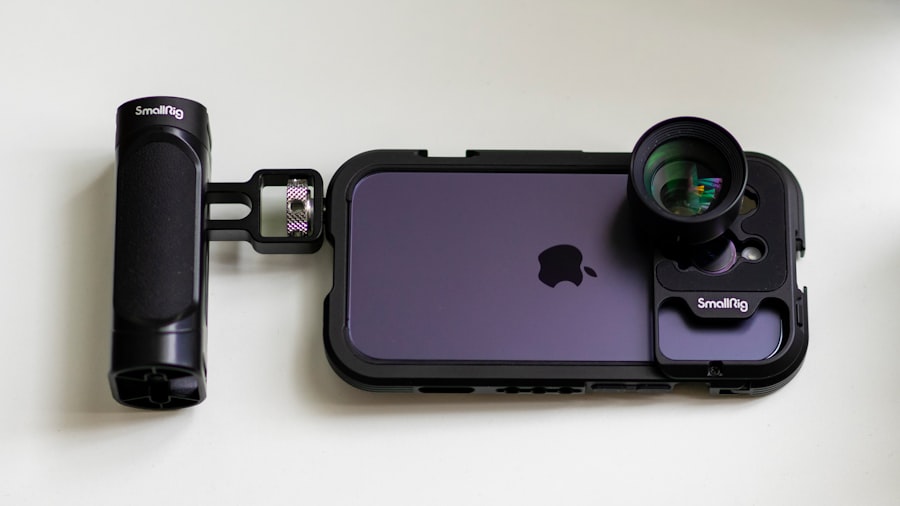
The multi-camera setup is no longer a novelty; it is a fundamental aspect of high-end smartphones. By 2025, this array will transform into a highly specialized orchestra, with each lens playing a distinct and crucial role.
The Dominance of Ultra-Wide, Wide, and Telephoto Trios
The trinity of ultra-wide, wide (main), and telephoto lenses will remain the bedrock of the multi-camera system. However, the quality of each of these lenses, particularly the ultra-wide and telephoto, will see significant improvement. Ultra-wide lenses will boast reduced distortion and improved edge sharpness, offering a truly expansive view without compromise. Telephoto lenses will feature longer optical zooms and better low-light performance. This means that each lens in the trio will be held to the same high standard, eliminating the “weak link” often found in current implementations.
The Emergence of Dedicated Macro and Depth Sensors
While software-based depth mapping is improving, dedicated macro lenses (often employing advanced optical designs) will gain traction for consistently sharp and detailed close-up photography. Furthermore, specialized depth sensors, such as LiDAR (Light Detection and Ranging) or advanced Time-of-Flight (ToF) sensors, will become more sophisticated, offering not only accurate depth mapping for portrait mode but also enabling advanced augmented reality (AR) applications and more precise autofocus in challenging conditions. The depth sensor becomes the camera’s eyes for understanding three-dimensional space, providing context for everything from bokeh to spatial computing.
Beyond the Visible Spectrum: Niche Sensors
While still a more speculative development, research into niche sensors, perhaps for multispectral imaging or extended infrared capabilities, could begin to appear in experimental smartphone cameras. These applications would cater to specialized use cases, such as environmental monitoring, advanced material analysis, or even enhanced night vision capabilities that go beyond simple light amplification. This pushes the boundaries of what a smartphone camera can “see,” extending its sensory reach.
Video Capabilities: Cinematic Power in Your Pocket
The smartphone’s video capabilities, already impressive, will continue their ascent, offering a level of control and quality previously reserved for dedicated video cameras.
8K Video as Standard with Enhanced Processing
8K video recording will become a standard feature on flagship devices, transcending its current status as a novelty. Crucially, the accompanying processing power will ensure that 8K footage is not just recorded but also processed and edited smoothly on the device. This includes improved compression algorithms that maintain quality while minimizing file sizes, and powerful image stabilization that makes handheld 8K footage genuinely usable. The transition to 8K will be less about pixel count and more about the holistic experience of capturing, editing, and sharing ultra-high-definition content.
Advanced Computational Video Stabilization
Gone are the days of simple electronic image stabilization. Expect computational video stabilization to reach new heights, intelligently combining optical and electronic methods with predictive algorithms. This will result in gimbal-like smoothness even in highly dynamic scenarios, transforming jerky handheld footage into buttery-smooth cinematic sequences. The camera acts as a professional steadicam operator, but without the physical bulk.
Log Profiles and Pro-Level Color Grading
For enthusiasts and professionals, more sophisticated video recording options will become available. This includes the widespread adoption of log profiles, which preserve a wider dynamic range and offer greater flexibility for color grading in post-production. On-device color grading tools will also become more powerful, allowing users to apply cinematic looks and fine-tune color accuracy directly from their smartphone, blurring the lines between mobile and professional video workflows.
As we look ahead to the future of smartphone cameras in 2025, it’s fascinating to consider the advancements that will shape our photography experiences. Innovations in artificial intelligence and computational photography are expected to play a significant role in enhancing image quality and user experience. For those interested in exploring how technology is transforming various fields, a related article on email marketing automation offers insights into building effective strategies that convert. You can read more about it here. The intersection of these technologies highlights the ever-evolving landscape of digital tools that empower users in both photography and marketing.
User Experience and Integration: Photography as an Extension of Self
| Feature | Expected Specification in 2025 | Current Standard (2023) | Improvement |
|---|---|---|---|
| Camera Resolution | 200 MP+ | 108 MP | ~85% increase |
| Optical Zoom | 15x – 20x | 10x | 50% – 100% increase |
| Sensor Size | 1/1.1 inch or larger | 1/1.3 inch | ~18% increase |
| Video Resolution | 8K at 60fps | 8K at 30fps | Double frame rate |
| AI Image Processing | Real-time multi-frame HDR with scene recognition | Basic HDR and night mode | Advanced AI-driven enhancements |
| Low Light Performance | Improved sensor sensitivity and noise reduction | Good but limited in extreme low light | Significant improvement |
| Front Camera | Under-display 40 MP with autofocus | 32 MP fixed focus | Higher resolution and autofocus |
| 3D Depth Sensing | Integrated LiDAR or ToF sensors | Limited or external modules | Better AR and portrait effects |
Beyond the raw technical specifications, the user experience of smartphone photography will continue to evolve, becoming more intuitive, personalized, and deeply integrated into the overarching smartphone ecosystem.
AI-Powered Scene Optimization and Personalization
AI will move beyond simple scene recognition to truly personalized optimization. The camera will learn your photographic preferences over time, suggesting optimal settings or even subtly adjusting the image to match your unique style. Imagine the camera knowing you prefer a slightly warmer tone for landscapes or a specific level of contrast for portraits – and applying those preferences automatically. This makes the camera a photographic subconscious, anticipating needs before they are explicitly stated.
Seamless Cloud Integration and Intelligent Organization
The integration with cloud services will become even more seamless, offering instant backup, intelligent categorization, and advanced search capabilities. AI will be able to identify not just people and objects in your photos, but also emotions, events, and complex scenarios, making it effortless to find specific memories within vast photo libraries. The cloud becomes an intelligent extension of your photo album, allowing effortless recall and sharing.
Augmented Reality Photography and Immersive Experiences
AR technology will continue to mature, offering new creative avenues within photography. This could include real-time AR filters that interact with the physical environment, or the ability to seamlessly integrate virtual objects into photographic compositions. The camera will not just capture reality, but enhance or augment it, opening up new frontiers for artistic expression and storytelling. Imagine placing a virtual piece of furniture in your living room and perfectly capturing it in a photograph before making a purchase decision.
As we look ahead to the advancements in smartphone cameras in 2025, it’s fascinating to consider how emerging technologies will reshape our photography experiences. A related article that delves into these innovations can be found at JDG Agency, where experts discuss the potential of AI integration and enhanced sensor capabilities. These developments promise to elevate the quality of mobile photography, making it more accessible and exciting for users around the globe.
Conclusion
The smartphone camera in 2025 will be a testament to the relentless innovation in mobile technology. It will be a sophisticated fusion of advanced hardware, intricate computational photography, and an intelligent understanding of user intent. No longer just a convenience, it will evolve into a powerful creative instrument, capable of capturing the world with unprecedented detail, dynamic range, and artistic control. Users can expect a photographic experience that is not only technically superior but also deeply integrated into their digital lives, making the act of capturing and sharing memories more effortless and expressive than ever before. The camera will become a true extension of the photographer’s vision, a digital mirror reflecting the world through an intelligent and highly capable lens.
FAQs
1. What new features can we expect in smartphone cameras by 2025?
By 2025, smartphone cameras are expected to include advanced AI-powered image processing, improved low-light performance, higher resolution sensors, and enhanced computational photography capabilities such as real-time 3D mapping and augmented reality integration.
2. How will AI impact smartphone photography in 2025?
AI will play a significant role by automatically optimizing camera settings, improving image quality, enabling advanced scene recognition, and providing features like real-time editing and enhanced portrait modes, making professional-quality photography more accessible.
3. Will smartphone cameras replace traditional cameras by 2025?
While smartphone cameras will continue to improve and cover most casual photography needs, traditional cameras, especially professional DSLRs and mirrorless models, will still be preferred for specialized photography due to their superior optics and manual controls.
4. How is computational photography evolving in smartphone cameras?
Computational photography is evolving to combine multiple images, use AI algorithms for noise reduction, HDR enhancement, and depth mapping, resulting in sharper, more detailed photos with better dynamic range and color accuracy.
5. Are there any advancements in smartphone camera hardware expected by 2025?
Yes, advancements include larger image sensors, periscope-style zoom lenses for higher optical zoom levels, improved image stabilization systems, and integration of new sensor types like time-of-flight (ToF) and LiDAR for better depth sensing and augmented reality applications.