The contemporary digital landscape is characterized by an unprecedented acceleration in consumer expectations, whereby the temporal efficiency of a website has transitioned from a competitive advantage to a fundamental prerequisite for commercial viability. As organizations increasingly migrate their operations to complex digital ecosystems, the latency associated with page load times has emerged as a primary catalyst for transactional friction and diminished brand equity. Within this context, the deployment of professional technical SEO services represents the critical bridge between sophisticated web architecture and the realization of optimized conversion goals.
1. The Immediate Correlation Between Latency and Transactional Abandonment
The relationship between the temporal performance of a web platform and the resulting conversion rates is characterized by a high degree of sensitivity, as even marginal delays of a single second have been observed to precipitate a substantial reduction in successful transactions. Empirical data suggests that a one-second delay in page responsiveness results in an estimated seven percent decrease in total conversions; furthermore, the disparity in performance becomes even more pronounced when comparing top-tier platforms to those with suboptimal infrastructure. While websites that achieve a one-second load time facilitate a robust environment for user acquisition, those that extend into the five-second range experience a threefold reduction in conversion efficiency. Consequently, the prioritization of speed optimization via specialized technical SEO services is essential for maintaining the integrity of the sales funnel and ensuring that prospective clients are not lost to the initial friction of slow loading.
2. Escalating Bounce Rates and the Erosion of Initial Engagement
The initial interaction between a consumer and a digital interface is a pivotal moment that dictates the trajectory of the entire customer journey; however, excessive load times frequently terminate this journey before it has truly commenced. Research indicates that sixty-three percent of visitors will abandon a platform if the loading duration exceeds four seconds, illustrating a clear threshold beyond which the probability of bounce increases exponentially. When a page requires three seconds or more to manifest, the bounce rate is observed to be thirty-two percent higher than those loading within a single second, creating a scenario where the organization loses potential revenue regardless of the quality of its offerings. By leveraging technical SEO services, organizations can mitigate these risks by optimizing the critical rendering path and ensuring that the visual elements are prioritized for immediate user engagement.

3. The Performance Disparity in Mobile-First Environments
As the global proliferation of mobile devices continues to reshape how information is consumed, the necessity for mobile-specific optimization has become paramount for any organization seeking to sustain its market position. The challenges inherent in mobile browsing: such as variable network conditions and limited hardware processing power: exacerbate the negative impacts of suboptimal site speed, often resulting in a twenty-two percent drop in conversions when performance is not adequately addressed. Because modern users have been conditioned to expect mobile responsiveness within two seconds or less, any deviation from this standard is perceived as a failure of the platform’s utility. The integration of mobile-first optimization strategies within a broader framework of digital marketing ensures that the mobile experience remains seamless, thereby preserving conversion rates across all device types.
4. Search Engine Visibility and the Diminishment of Crawl Efficiency
Search engine algorithms have undergone a profound evolution, increasingly prioritizing the user experience as a primary ranking signal; as such, slow-loading websites are subject to systemic penalties that reduce their visibility within search engine results pages. Beyond the immediate impact on user behavior, poor performance hampers the ability of search engine crawlers to efficiently index a site's content, whereby a slow server response time consumes the "crawl budget" allocated to the domain. This inefficiency results in a scenario where new content or updates are not reflected in a timely manner, further distancing the organization from its target audience. Through the application of technical SEO services, businesses can ensure that their technical infrastructure: including server response times and resource minification: facilitates rather than hinders the indexing process.
5. Psychological Friction and the Perception of Brand Authority
The speed at which a digital platform operates serves as a non-verbal cue regarding the competence and reliability of the organization it represents; thus, a slow-loading interface can inadvertently signal a lack of professionalism or technical obsolescence. When a user encounters significant latency, the resulting frustration creates psychological friction that colors their perception of the brand's entire service offering, often leading them to question the security and stability of the platform. In an era where trust is a critical currency, maintaining an agile and responsive website is essential for reinforcing brand authority and fostering long-term consumer confidence. Organizations must recognize that the technical health of their website, supported by ongoing web design and maintenance, is a direct reflection of their commitment to the customer experience.

6. The Reduction in Page Depth and Content Consumption
A high-performance website encourages a journey of discovery, enabling users to explore multiple pages and engage deeply with the brand’s narrative; conversely, a slow site discourages such behavior, confining the user to a superficial interaction. When the transition between internal pages is characterized by lag, the likelihood of a user navigating through the site architecture diminishes significantly, which in turn reduces the opportunities for cross-selling and lead generation. This reduction in page depth not only limits the immediate conversion potential but also negatively impacts the data collected on user behavior, making it more difficult to refine marketing strategies. The implementation of efficient caching mechanisms and optimized database queries through technical SEO services allows for a fluid navigation experience that promotes deeper content exploration.
7. Inefficiencies in Paid Advertising and Return on Ad Spend (ROAS)
For organizations investing heavily in paid traffic, the performance of the landing page is directly linked to the return on investment; specifically, slow load times can artificially inflate the cost of customer acquisition. Most advertising platforms incorporate landing page experience into their quality score metrics, whereby poor performance leads to higher costs-per-click and lower ad visibility. Furthermore, when users click on a paid advertisement only to be met with a slow-loading page, the likelihood of immediate abandonment increases, resulting in wasted ad spend and a diminished conversion rate for the campaign. By ensuring that landing pages are optimized for speed, organizations can maximize the efficacy of their paid initiatives and achieve a more favorable ROAS, leveraging cloud computing and advanced hosting solutions to maintain peak performance.
8. Visibility Challenges within AI-Driven Search Environments
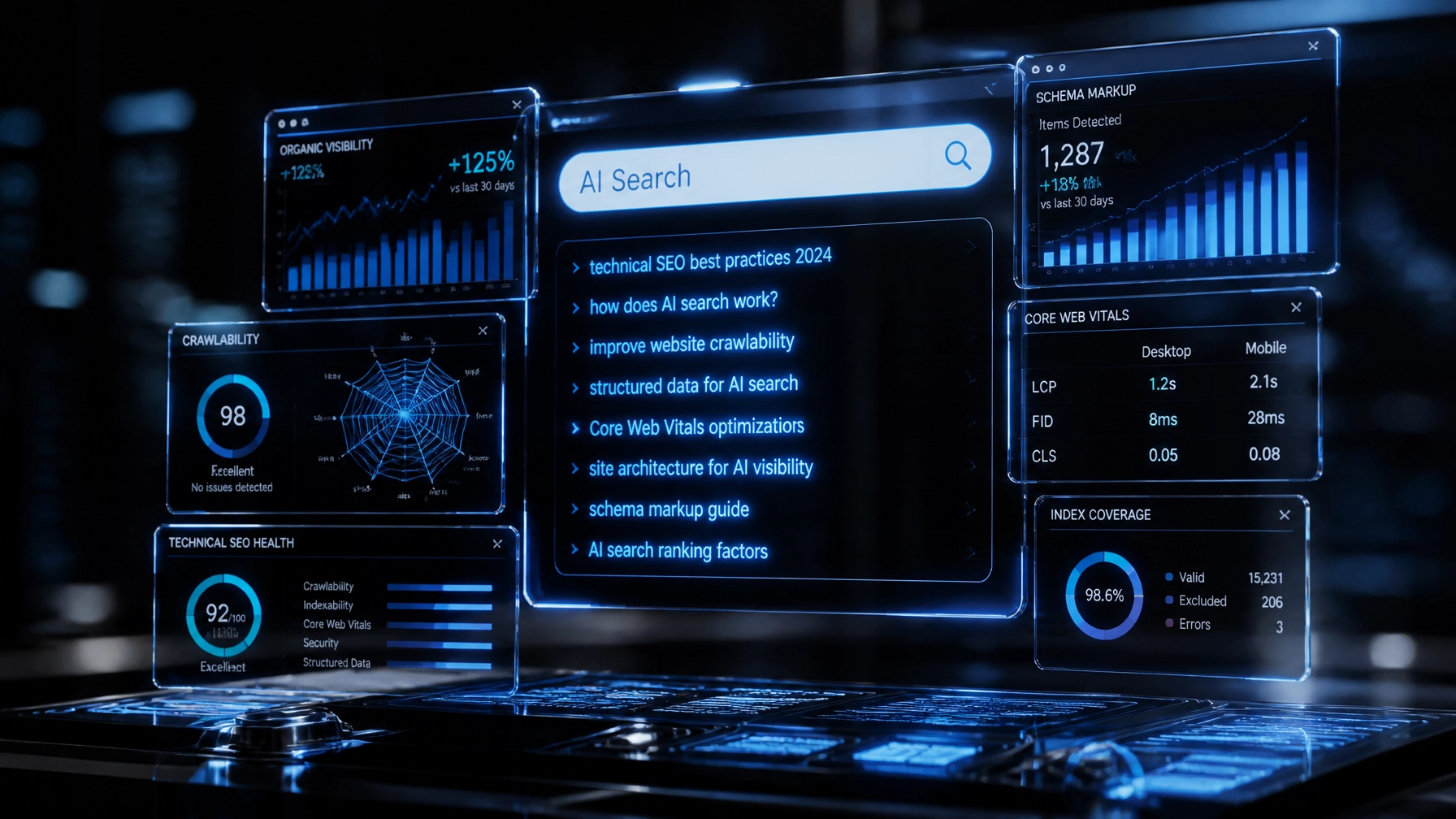
The emergence of AI-driven search tools and large language models has introduced a new dimension to digital visibility, where these systems increasingly prioritize websites that demonstrate high levels of technical authority and speed. Slow-loading websites are frequently viewed as less authoritative by these AI tools, which can lead to a reduction in the frequency with which an organization's content is cited in AI-generated responses. As consumers shift toward conversational search and AI-mediated discovery, the technical robustness of a website becomes a pivotal factor in maintaining relevance. Professional technical SEO services focus on structured data and performance metrics that satisfy the requirements of both traditional search engines and emerging AI platforms, ensuring continued visibility in a changing technological landscape.
9. Infrastructure Scalability and the Role of Modern Hosting
The underlying architecture of a website must be capable of handling fluctuations in traffic without compromising speed, yet many organizations rely on outdated infrastructure that fails under pressure. The synergy between a website’s code and its web hosting environment is paramount, as even the most optimized front-end cannot compensate for a slow server. Dedicated server management and the use of Content Delivery Networks (CDNs) are essential components of a modern performance strategy, allowing content to be served from locations geographically closer to the user. This infrastructure-level optimization is a core component of technical SEO services, providing the scalability required to support growth and high-traffic events without a degradation in the user experience.

10. Long-term Customer Retention and Lifetime Value (LTV)
While the immediate impact of site speed is often measured in terms of bounce rates and conversions, its long-term effect on customer retention is equally significant. A fast and reliable digital experience fosters a sense of loyalty, as users are more likely to return to a platform that respects their time and provides a frictionless interface. Conversely, a single negative experience with a slow-loading site can permanently deter a customer, significantly reducing their lifetime value to the organization. As organizations shift toward subscription models and repeat-purchase strategies, the importance of maintaining a high-performance digital presence cannot be overstated. By consistently delivering a superior technical experience, businesses can build a foundation for sustained growth and enduring customer relationships.
The Strategic Implementation of Technical SEO Services
The multifaceted challenges presented by site speed require a comprehensive and systematic approach to remediation, moving beyond superficial fixes to address the root causes of latency. This process begins with an exhaustive audit of the existing digital infrastructure, encompassing everything from server-side scripts to the delivery of visual assets. Key interventions typically include the minification of CSS and JavaScript, the implementation of advanced image compression techniques, and the streamlining of the Document Object Model (DOM) to ensure rapid rendering.
Moreover, the integration of technical SEO services ensures that performance optimization is balanced with the need for rich, engaging content and complex functionality. This balance is achieved through the use of asynchronous loading for non-critical resources and the strategic deployment of browser caching, which enables frequent visitors to load the site with minimal latency. As the digital landscape continues to evolve, organizations that commit to the continuous monitoring and optimization of their technical performance will be best positioned to navigate the complexities of the market and achieve their commercial objectives.
In conclusion, the evolution of the digital marketplace has placed site speed at the center of the conversion equation, making it a critical determinant of an organization’s success. While the challenges of maintaining a high-performance website are significant, the opportunities for those who excel in this area are profound. By embracing the necessity of technical SEO services and prioritizing the technical health of their platforms, businesses can not only enhance their immediate conversion rates but also build a resilient and authoritative digital presence that is prepared for the future of search and user engagement. The journey toward digital excellence is an ongoing process of refinement, and the commitment to performance remains a cornerstone of any successful digital transformation strategy.