
Information Architecture (IA) serves as the fundamental framework upon which scalable websites are built. It is the invisible scaffold that supports content, functionality, and user experience, ensuring that a digital presence can grow, adapt, and perform effectively as demands increase. Without a robust IA, a website can become an unwieldy and inefficient entity, struggling to accommodate new features, expanding content libraries, or an increasing volume of users. Understanding and implementing sound information architecture principles is therefore not merely a design consideration; it is a strategic imperative for any organization aiming for long-term digital success.
The effectiveness of Information Architecture hinges on several core principles. These principles act as the bedrock, providing clarity and structure to the complex landscape of digital information. Just as a building requires a solid foundation to withstand the test of time and increasing strain, a website’s scalability depends on these underlying tenets.
Organizing Content for Clarity
The primary goal of IA is to make information findable and understandable. This involves a systematic approach to categorizing and labeling content, ensuring that users can easily navigate and locate what they are looking for.
Content Inventory and Audits
Before any organizational structure can be devised, a comprehensive understanding of the existing content is necessary. This involves conducting thorough content inventories, which are essentially detailed lists of all digital assets, including pages, documents, images, and other media. Following an inventory, content audits assess the quality, relevance, and accuracy of this content. This process is akin to a librarian meticulously cataloging every book in a library to understand the existing collection before deciding on a shelving system.
Classification Schemes and Taxonomies
Once the content has been inventoried and audited, it needs to be classified. Classification schemes provide a consistent method for grouping and organizing information. Taxonomies, a specific type of classification scheme, establish hierarchical relationships between terms and concepts. For instance, in an e-commerce website, a taxonomy might organize products from broad categories (e.g., “Electronics”) down to specific subcategories (e.g., “Televisions” > “LED TVs” > “Smart TVs”). This structured approach guides users through a logical path, preventing them from feeling lost in a sea of undifferentiated data.
Labeling Systems and Metadata
The labels used to identify and describe content are crucial for user comprehension. Effective labeling systems are clear, concise, and consistent. Metadata, which is data that describes other data, plays a vital role in this. Product descriptions, keywords, author information, and publication dates are all forms of metadata that enhance discoverability and provide context. Think of metadata as the descriptive tags on library books that allow search engines to find them.
Designing Intuitive Navigation Systems
Navigation is the user’s primary means of interacting with a website. A well-designed navigation system guides users seamlessly through the digital space, making it easy for them to access different sections and functionalities.
Global Navigation
Global navigation typically appears on every page of a website and provides access to the most important sections. This often includes links to the homepage, contact information, product categories, or primary services. The consistent presence of global navigation acts as a constant anchor, allowing users to orient themselves and move between major areas of the site with confidence.
Local Navigation
Local navigation, on the other hand, pertains to navigation within a specific section or subsection of the website. This could include a sidebar menu displaying subcategories or related pages within a particular product line. Local navigation helps users explore content within a defined context, preventing them from having to jump back to the global navigation for every minor step.
Contextual Navigation
Contextual navigation embeds links directly within the content itself. This allows users to discover related information or take immediate action based on the content they are currently viewing. For example, a blog post about a particular software feature might include a link to download that software or a link to a related article about advanced usage. This type of navigation is highly effective for guiding users down specific paths of interest without disrupting their current flow.
Breadcrumbs
Breadcrumbs are a navigational aid that shows users their current location within the website’s hierarchy. They typically appear at the top of a page and display a trail of links leading back to the homepage. Breadcrumbs are invaluable for complex websites with deep hierarchical structures, helping users understand where they are and providing an easy way to backtrack without losing their place.
In exploring the significance of Information Architecture as the backbone of scalable websites, it’s also essential to consider how modern tools can enhance the overall web experience. A related article discusses the impact of AI content creation tools on productivity while maintaining a unique voice, which can be crucial for effective information dissemination. You can read more about this topic in the article titled “AI Content Creation Tools: Enhancing Productivity Without Losing Your Voice” available at this link.
The Role of Information Architecture in Scalability
Scalability in website development refers to the ability of a system to handle an increasing amount of work or users without compromising performance or user experience. Information Architecture is intrinsically linked to this concept, providing the structural integrity that allows a website to grow.
Accommodating Content Expansion
As a website matures, its content library typically grows. Without a well-defined IA, this expansion can lead to a disorganized and overwhelming repository of information, making it difficult for users to find new content and even leading to the neglect of older, but still valuable, content.
Hierarchical Growth
A robust IA allows for hierarchical growth. As new categories or subcategories are needed, they can be integrated into the existing structure without disrupting the overall organization. This is akin to adding new wings to a well-designed library; the new sections are integrated logically with the existing ones, maintaining flow and accessibility.
Content Tagging and Relations
Effective use of tagging and establishing relationships between different pieces of content are crucial for managing expansion. Users can discover related content through tags or links, even if it resides in different sections of the website. This creates a dynamic and interconnected information ecosystem that can absorb new additions gracefully.
Supporting Functional Growth and Feature Integration
Scalability also extends to the website’s functionality. As new features are developed and integrated, the IA must be flexible enough to accommodate them without creating user confusion or technical debt.
Modular Design
Information Architecture often champions a modular approach to website design. This means breaking down the website into discrete, reusable components that can be assembled and reassembled as needed. New functionalities can then be developed as modules and integrated into the existing IA without requiring a complete overhaul of the site.
User Flow Mapping
Understanding user flows – the paths users take to complete specific tasks – is critical for functional scalability. IA ensures that these flows remain logical and efficient even as new features are added. If a new feature is introduced, its integration into relevant user flows must be carefully considered to avoid creating dead ends or confusing detours.
Feature Discoverability
When new features are added, the IA must ensure that they are discoverable by users. This involves integrating them into the navigation, labeling them clearly, and potentially highlighting them through prominent calls to action or contextual links. A new feature is useless if no one can find it.
The Impact of Information Architecture on User Experience

User Experience (UX) is the ultimate beneficiary of sound Information Architecture. A website that is easy to understand and navigate fosters positive user interactions, leading to increased engagement and satisfaction.
Reducing Cognitive Load
Cognitive load refers to the amount of mental effort required to process information. A well-structured IA minimizes cognitive load by presenting information in a clear, predictable, and organized manner. Users don’t have to strain to understand where they are or how to get where they want to go.
Predictable Layouts
Consistent layouts and navigation patterns across the website create a sense of familiarity and predictability. Users can apply their understanding from one section to another, reducing the need to re-learn how to interact with the site.
Clear Calls to Action
Effective IA ensures that calls to action are clear, concise, and strategically placed. Users should understand what they are being asked to do and how to do it without ambiguity.
Enhancing Findability and Searchability
The ability for users to quickly and easily find the information or functionality they need is a cornerstone of good UX. IA directly impacts this by organizing content logically and supporting effective search mechanisms.
Internal Search Optimization
A well-defined IA provides a solid foundation for an effective internal search engine. By understanding the relationships between content and using appropriate metadata, the search function can deliver more relevant results, saving users time and frustration. Imagine a library’s card catalog being poorly organized; finding a specific book would be a monumental task.
Faceted Search
For websites with large and complex datasets, faceted search (also known as guided search or filtered search) is a powerful tool enabled by good IA. This allows users to refine their search results by applying multiple filters based on attributes like price, brand, color, or date.
Building Trust and Credibility
A website that is easy to use and presents information clearly builds trust and credibility with its audience. Users are more likely to engage with and return to a site that they perceive as professional and reliable.
Consistency and Professionalism
A consistent and well-organized website signals professionalism and attention to detail. This can significantly impact a user’s perception of the organization behind the website.
Clear Information Hierarchy
When information is presented in a clear hierarchy, it demonstrates that the organization understands its own content and values the user’s time. This transparency fosters trust.
The Practical Implementation of Information Architecture
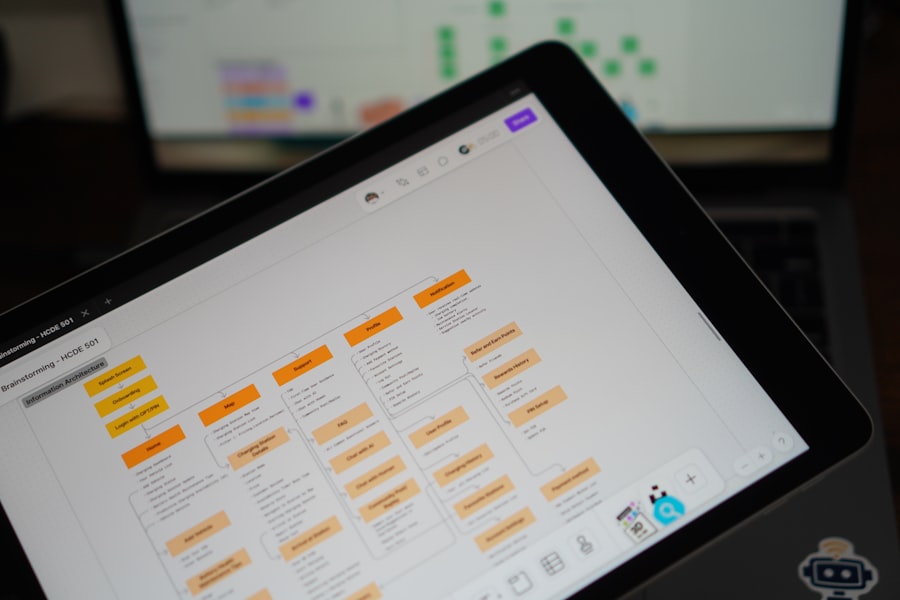
Implementing Information Architecture is a process that requires careful planning, research, and collaboration. It is not a one-time task but an ongoing effort that evolves with the website.
User Research and Persona Development
Understanding the target audience is paramount in IA. User research methods, such as interviews, surveys, and usability testing, provide insights into user needs, behaviors, and mental models. Personas are fictional representations of these target users, based on research, which help designers empathize with the user and make decisions that cater to their needs.
Understanding User Mental Models
Mental models are users’ preconceived notions about how a system works. IA aims to align the website’s structure with these mental models, making the experience intuitive. If users expect to find customer support under a “Help” link, the IA should reflect that expectation.
Defining User Journeys
Mapping out typical user journeys helps to identify key interaction points and potential points of friction. This allows for the design of navigational and content structures that facilitate smoother transitions through these journeys.
Wireframing and Prototyping
Wireframes are low-fidelity visual representations of a website’s page layouts, focusing on structure and content placement rather than visual design. Prototypes are interactive models that simulate the user experience, allowing for testing of navigation and functionality before significant development resources are invested.
Low-Fidelity Wireframes
These are skeletal outlines that map out the basic structure of pages and the placement of key elements like navigation, content areas, and calls to action. They are excellent for initial IA discussions and revisions.
High-Fidelity Prototypes
These interactive prototypes closely resemble the final product in terms of layout, functionality, and workflow. They are crucial for detailed usability testing and for demonstrating the IA in action to stakeholders.
Collaboration and Iteration
Information Architecture is rarely a solitary pursuit. Effective IA requires collaboration between designers, developers, content strategists, and business stakeholders. The process is inherently iterative, with continuous refinement based on research, testing, and evolving business needs.
Cross-Functional Teams
Bringing together individuals with diverse expertise ensures a holistic approach to IA. Developers can advise on technical feasibility, while content strategists can ensure content alignment with organizational goals.
Usability Testing and Feedback Loops
Regular usability testing with representative users is essential for identifying flaws in the IA. The feedback gathered from these tests should inform subsequent iterations of the IA, leading to continuous improvement.
In exploring the significance of Information Architecture as the backbone of scalable websites, it’s also essential to consider how effective communication strategies, such as email marketing automation, can enhance user engagement. A related article discusses the intricacies of building sequences that convert, which can complement a well-structured website by ensuring that visitors receive timely and relevant information. You can read more about this topic in the article on email marketing automation.
The Future of Information Architecture in a Dynamic Digital Landscape
| Metric | Description | Impact on Website | Example Value |
|---|---|---|---|
| Navigation Depth | Number of clicks to reach any page from the homepage | Lower depth improves user experience and findability | 3 clicks |
| Content Categorization | Number of main content categories defined | Clear categories help users and search engines understand structure | 5 categories |
| Page Load Time | Average time for a page to fully load | Faster load times reduce bounce rates and improve engagement | 2.5 seconds |
| Search Success Rate | Percentage of successful searches returning relevant results | Higher rate indicates effective IA and content organization | 85% |
| URL Structure Consistency | Percentage of URLs following a logical, hierarchical pattern | Consistent URLs improve SEO and user trust | 95% |
| Content Redundancy | Percentage of duplicate or overlapping content pages | Lower redundancy reduces confusion and maintenance effort | 3% |
| User Task Completion Rate | Percentage of users able to complete key tasks successfully | Higher rates indicate intuitive IA and usability | 90% |
The digital landscape is constantly evolving, with new technologies and user expectations emerging regularly. Information Architecture must adapt to remain relevant and effective in this dynamic environment.
The Rise of AI and Machine Learning
Artificial Intelligence (AI) and machine learning are increasingly being utilized to enhance IA. AI-powered recommendation engines and personalized content delivery systems are examples of how these technologies can leverage IA to create more tailored user experiences.
Personalized Content Delivery
AI can analyze user behavior and preferences to deliver content dynamically, adapting the information architecture to individual needs. This moves beyond static navigation to a more fluid and responsive information environment.
Intelligent Search and Discovery
Machine learning algorithms can improve the accuracy and relevance of search results, understanding user intent more deeply. This can lead to more intuitive and efficient content discovery.
Mobile-First and Omnichannel Approaches
The proliferation of mobile devices has made mobile-first design a standard practice, impacting IA by emphasizing mobile navigation patterns and content prioritization. Furthermore, the expectation of seamless experiences across multiple devices and channels (omnichannel) necessitates an IA that can bridge these different touchpoints.
Adaptive and Responsive Layouts
IA principles that support adaptive and responsive design ensure that content is accessible and usable across a wide range of screen sizes and devices. The underlying structure must be flexible enough to accommodate these variations.
Unified Content Strategies
In an omnichannel world, IA needs to support a unified content strategy. This means ensuring that content is structured in a way that can be repurposed and delivered consistently across websites, mobile apps, social media, and other platforms.
The Importance of Content Strategy Alignment
Ultimately, a successful Information Architecture is inextricably linked to a well-defined content strategy. The IA provides the structure, while the content strategy provides the substance. These two disciplines must work in tandem to create a cohesive and effective digital presence.
Content as a Strategic Asset
Viewing content not just as words on a page but as a strategic asset that needs to be organized, managed, and delivered effectively is crucial. IA ensures that this asset is accessible and valuable to the user.
Continuous Evaluation and Optimization
The digital world is not static. Therefore, the IA and content strategy must be continuously evaluated and optimized to remain effective. This involves ongoing monitoring of user behavior, content performance, and technological advancements. By embracing these principles, organizations can build websites that are not only scalable today but also resilient and adaptable for the future.
FAQs
What is information architecture in the context of websites?
Information architecture (IA) refers to the structural design of shared information environments. In websites, it involves organizing, structuring, and labeling content effectively to help users find information and complete tasks easily.Why is information architecture important for scalable websites?
Information architecture is crucial for scalable websites because it ensures that as the website grows, the content remains organized and accessible. Good IA supports easy navigation, improves user experience, and allows for efficient content management and expansion.
What are the key components of information architecture?
The key components of information architecture include organization systems (how content is categorized), labeling systems (how information is named), navigation systems (how users browse content), and search systems (how users find information).
How does information architecture impact user experience?
Effective information architecture enhances user experience by making websites intuitive and easy to navigate. It reduces the time and effort users spend searching for information, leading to higher satisfaction and engagement.
Can information architecture be changed after a website is launched?
Yes, information architecture can and often should be updated after a website launch. As user needs evolve and new content is added, revising the IA helps maintain usability and scalability over time.