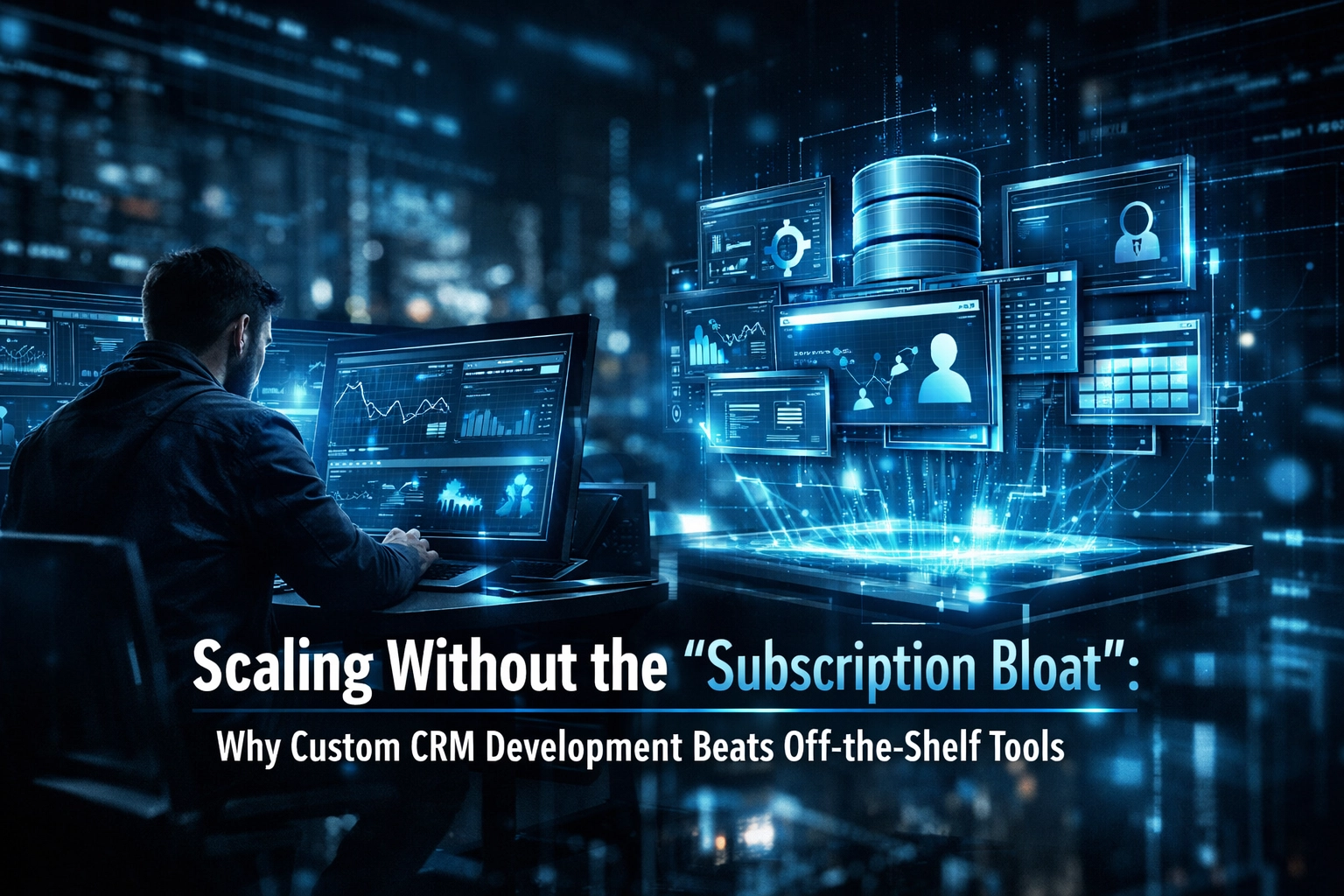
In the modern digital landscape, the promise of "Software as a Service" (SaaS) has transitioned from a revolutionary convenience into a compounding financial burden for many growing organizations. While the initial adoption of platforms like Salesforce or HubSpot offers a low barrier to entry, the subsequent trajectory of these relationships often results in what is now commonly referred to as "subscription bloat." As companies strive for greater operational efficiency, the realization that they are paying for a vast array of unused features: while being penalized for their own growth via per-user pricing: has catalyzed a significant shift toward custom CRM development.
The allure of off-the-shelf solutions lies in their immediacy; however, this immediacy often masks a lack of strategic alignment with a business's unique internal workflows. For a scaling enterprise, the Customer Relationship Management (CRM) system is not merely a database but the central nervous system of the entire operation. When this system is a generic, third-party template, the organization is forced to bend its processes to fit the software, rather than the software evolving to empower the business.
The Financial Paradox of Off-the-Shelf Solutions
The most immediate friction point for any executive monitoring the bottom line is the escalating cost of SaaS subscriptions. Off-the-shelf CRM providers typically employ a "land and expand" strategy, where the base price is manageable, but the true cost reveals itself through tiers, add-ons, and seat licenses. As an organization scales, it is essentially taxed for its success; every new hire necessitates a new monthly fee, often in the hundreds of dollars, regardless of whether that employee utilizes 10% or 100% of the platform’s capabilities.
Furthermore, these platforms bundle features in a way that forces companies into higher-priced tiers just to access one or two essential functions. This leads to a bloated tech stack where 70% of the interface consists of tools that are never touched, yet are paid for every single month. By contrast, building scalable tech infrastructure for growing companies involves stripping away the unnecessary and focusing capital on the specific mechanisms that drive revenue.

Custom CRM Development: The Architecture of Efficiency
Custom CRM development offers a departure from the "one size fits all" mentality, allowing for the creation of a proprietary asset that is tailored to the exact specifications of a company’s sales cycle, customer support protocols, and internal communications. This bespoke approach ensures that every pixel on the screen serves a purpose and every automated workflow reflects the reality of the team’s daily operations.
By investing in a custom solution, an organization shifts its spending from an ongoing operational expense (OpEx) to a strategic capital investment (CapEx). While the upfront costs are higher than a monthly subscription, the long-term ROI is profound. Once the system is built, the "per-user" penalty disappears. Whether you have ten employees or ten thousand, the core software costs remain static, allowing for using key metrics to scale your startup without the fear of software bills eating into the margins.
Moreover, the integration capabilities of a custom CRM are theoretically limitless. Off-the-shelf tools often require expensive "integrators" or "middleware" to talk to your existing proprietary software or niche industry tools. With custom development, the hooks are built directly into the foundation, ensuring a seamless flow of data across the entire organization without the friction of third-party API limitations.
Data Sovereignty in a Volatile Market
In an era where data is the most valuable commodity, relying on a third-party vendor to house your most sensitive customer interactions presents a strategic risk. When you use a SaaS CRM, you are effectively renting access to your own data. If the provider changes their terms, increases their prices, or suffers a catastrophic outage, your entire operation is held hostage.
Custom CRM development provides total data sovereignty. You own the code, you own the database, and you control the security protocols. This level of control is particularly vital when implementing first-party data strategies in a cookieless world. As privacy regulations tighten and third-party tracking becomes obsolete, having a proprietary vault for your customer data ensures that your marketing and sales efforts remain resilient against external platform shifts.

Eliminating the Learning Curve through Intuitive Design
One of the most overlooked "hidden costs" of bloated SaaS platforms is the time spent on employee training. Platforms like Salesforce are so complex that they have spawned an entire industry of consultants and certification programs just to teach people how to use them. For a fast-moving agency or tech company, this complexity is a bottleneck.
A custom-built CRM can be designed with a "minimalist" philosophy, mirroring the actual steps a salesperson or account manager takes. By removing the clutter of irrelevant fields and tabs, you reduce cognitive load and improve adoption rates across the team. When the software feels like a natural extension of the job rather than an obstacle to it, productivity skyrockets. This focus on user experience is a cornerstone of data-driven web design, where every design choice is validated by how it helps the user achieve their goal faster.
Future-Proofing Your Growth
The "top mistakes that kill startups in their first 2 years" often include a failure to plan for technical debt. Choosing a rigid, off-the-shelf CRM early on might seem like the "safe" path, but it often leads to a painful and expensive migration down the road when the business outgrows the platform's limitations. Custom CRM development is, by its very nature, future-proof.
As your business model evolves: perhaps moving from a service-based model to a product-led growth model: your custom CRM can be updated and refactored to support that shift. You aren't waiting for a giant software corporation to release an update that may or may not address your needs; you have the keys to the engine room. This agility is what separates market leaders from those who are constantly playing catch-up with their own tools.

Technical Performance and Security
Beyond the functional benefits, there is the matter of performance. Off-the-shelf CRMs are often "heavy" applications, loaded with legacy code to support millions of different users. This can lead to slow load times and a clunky user experience. A custom solution is lean, optimized for the specific hardware and cloud environment of your choice.
When your CRM is fast, your team is fast. Just as site speed is killing conversions on the front end, "app speed" kills productivity on the back end. Custom development allows for the implementation of the latest security protocols and dedicated server management, ensuring that your customer data is not just "compliant," but fortress-level secure.
The Strategic Shift: From User to Owner
The decision to move away from the "subscription bloat" is a signal of organizational maturity. It is a move from being a consumer of generic tools to being a creator of proprietary systems. In the competitive landscape of digital agencies and web development, the efficiency of your internal stack is often the "secret sauce" that allows you to outmaneuver competitors with larger budgets but more bureaucracy.
While the transition requires a clear vision and a dedicated development partner, the destination is a business that is more agile, more profitable, and more secure. You are no longer just another account on a SaaS company’s balance sheet; you are the owner of a powerful asset that grows in value as your company grows.
If you are tired of paying for features you don't use and being penalized for every new hire you make, it’s time to look under the hood of your operations. Custom CRM development isn't just about software; it’s about reclaiming control over the way you do business.
To learn more about optimizing your digital presence and internal tools, explore our insights on building omnichannel conversion funnels or check out the latest trends in the JDG.AGENCY blog. The future of scaling isn't found in a subscription; it’s built from the ground up.