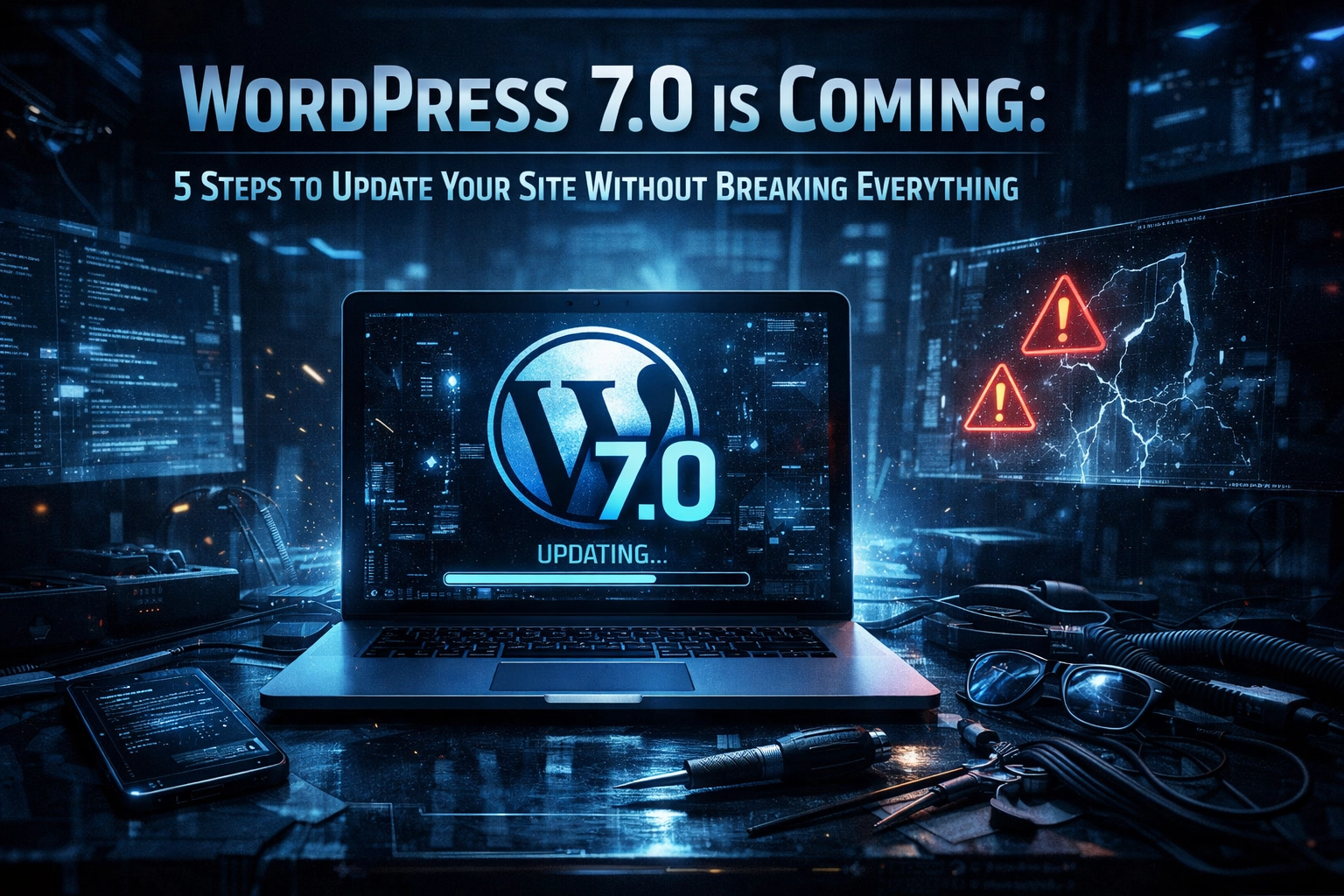
The evolution of the digital landscape is characterized by constant movement and technical refinement; as such, the impending release of WordPress 7.0, scheduled for April 9, 2026, represents a pivotal moment for organizations relying on this content management framework. While the introduction of new features and architectural improvements offers the promise of enhanced performance and greater flexibility, the transition to a major version also introduces significant risks regarding site stability and continuity of service. As organizations seek to maintain a competitive advantage in an increasingly complex digital ecosystem, the adoption of a structured, proactive approach to system updates has become not merely a recommendation but a foundational necessity for business resilience.
The proliferation of sophisticated web architectures means that a simple "click-to-update" mentality is no longer viable for professional enterprises where downtime results in immediate revenue loss and brand erosion. By understanding the underlying dependencies of the WordPress ecosystem: ranging from server-level PHP requirements to the intricate interplay of third-party plugins: businesses can navigate this transition with confidence. The following five strategic steps provide a comprehensive framework for updating to WordPress 7.0 while ensuring the integrity of the existing digital infrastructure remains uncompromised.
1. Establishment of a Rigorous Staging Environment
The implementation of a dedicated staging environment is the primary safeguard against the catastrophic failures often associated with major software transitions. Organizations must move beyond the practice of testing in production, whereby changes are applied directly to the live environment, potentially exposing end-users to broken layouts, failed checkouts, or complete site outages. A staging site serves as an exact replica of the production environment, enabling developers to execute the WordPress 7.0 update in a controlled vacuum where anomalies can be identified and remediated without external impact.

Visual style: Global Tech-Noir. A sleek, high-tech laboratory setting with translucent screens displaying mirrored digital interfaces, illuminated by cool cyan and deep magenta neon accents against a dark, polished background.
Furthermore, the utilization of staging environments allows for thorough regression testing, ensuring that the core functionality of the website remains intact across various devices and browsers. As the technical requirements for WordPress continue to advance, testing becomes an essential mechanism for identifying conflicts between the new core code and legacy theme frameworks. This process is particularly critical for businesses that have invested in information-architecture-the-backbone-of-scalable-websites, as major updates can occasionally disrupt the logical flow and hierarchy of complex data structures.
2. Comprehensive Data Redundancy and Recovery Protocols
While the goal of any update is a seamless transition, the complexity of modern databases necessitates a robust strategy for data redundancy. Before initiating any modification to the WordPress core, organizations must ensure that a complete, verified backup of the entire ecosystem: including the MySQL/MariaDB database, the uploads directory, and all configuration files: has been secured. This backup should ideally exist outside of the primary hosting environment, utilizing off-site storage to mitigate the risk of localized server failures during the update process.
The importance of database integrity cannot be overstated; as WordPress 7.0 introduces new table structures and data handling methods, the risk of corruption during the migration process is non-negligible. By establishing a clear recovery point objective (RPO), businesses can ensure that even in the event of a critical failure, the site can be restored to its pre-update state within minutes. This level of preparedness is a hallmark of sophisticated technical management, allowing for the experimentation necessary to leverage new features without the looming threat of permanent data loss.
3. Server-Side Optimization and PHP Alignment
The performance of WordPress 7.0 is intrinsically linked to the underlying server infrastructure; consequently, organizations must verify that their hosting environment is optimized for the latest technical standards. With the recommendation for PHP 8.3 and the minimum requirement of PHP 7.4, many legacy servers may require manual intervention to ensure compatibility. Upgrading the PHP version is a delicate process that can yield profound improvements in execution speed and security, yet it requires careful coordination to ensure that all active plugins and themes are compatible with the newer engine.
Moreover, the transition to WordPress 7.0 presents an opportunity to review the broader tech stack. Companies that prioritize high-performance outcomes often find that building-scalable-tech-infrastructure-for-growing-companies involves more than just software updates; it requires a synergy between the application layer and the hardware. Whether utilizing dedicated managed WordPress hosting or sophisticated cloud environments, the server must be tuned to handle the increased overhead often associated with new core features and enhanced security protocols.

Visual style: Global Tech-Noir. An abstract representation of a futuristic server rack, where glowing data packets flow through fiber-optic cables in a dark, atmospheric data center filled with low-lying fog and sharp geometric lighting.
4. Systematic Auditing of Third-Party Dependencies
One of the most frequent causes of site failure during a major WordPress update is the presence of incompatible third-party plugins and themes. As the core software evolves, the APIs and functions upon which these dependencies rely may be deprecated or altered, leading to "white screen of death" errors or subtle functional regressions. To mitigate this risk, a systematic audit of every active component must be performed prior to the April 9th release.
Organizations should identify mission-critical plugins and consult the developers’ documentation to confirm "WordPress 7.0 Ready" status. In instances where a plugin has not been updated in over six months, the risk of incompatibility increases exponentially. Furthermore, the impact of these updates on SEO must be considered; a single broken plugin responsible for schema markup or sitemap generation can lead to a significant decline in search visibility. Businesses must be vigilant to avoid the website-redesign-without-losing-seo-7-mistakes-that-could-tank-your-rankings-and-how-to-fix-them, as core updates can be just as disruptive to search rankings as a full site overhaul if technical SEO elements are inadvertently disabled.
5. Transitioning to Professional Managed Maintenance
As the WordPress ecosystem grows more sophisticated, the gap between "amateur" site management and professional digital stewardship continues to widen. The release of version 7.0 highlights the profound shift toward a landscape where manual, ad-hoc updates are no longer sufficient for maintaining enterprise-grade security and performance. Organizations that attempt to manage these transitions in-house often find themselves overwhelmed by the technical debt and troubleshooting requirements that arise post-update.

Visual style: Global Tech-Noir. A high-contrast close-up of a human hand interacting with a holographic interface of a website's health metrics, set against a backdrop of a rain-streaked window overlooking a futuristic city at night.
By engaging in professional WordPress maintenance services, organizations can leverage specialized expertise to navigate the complexities of major releases. Professional maintenance encompasses not only the execution of updates but also ongoing monitoring, security hardening, and performance tuning. This proactive approach ensures that the site remains optimized for conversions, preventing issues where site speed kills conversions due to bloated code or unoptimized server responses. Ultimately, the cost of professional management is far outweighed by the security and peace of mind it provides, allowing business leaders to focus on growth rather than technical troubleshooting.
The Path Forward for WordPress Ecosystems
The arrival of WordPress 7.0 is an inevitable and positive force that will drive further innovation in the digital realm. However, the success of this transition depends entirely on the preparation and strategic foresight of the organizations involved. By embracing a methodology that includes rigorous testing, comprehensive backups, infrastructure alignment, and professional oversight, businesses can ensure that their web presence remains a stable foundation for their digital operations.
As we move deeper into 2026, the demand for high-performance, secure, and scalable websites will only intensify. The organizations that thrive will be those that view their website not as a static asset, but as a dynamic, evolving infrastructure that requires constant care and technical precision. In conclusion, while the challenges of a major update are significant, they present a unique opportunity to modernize the digital footprint and reinforce the technological backbone of the modern enterprise. Forward-looking organizations will use the WordPress 7.0 release as a catalyst for excellence, ensuring their platforms are not only functional but prepared for the future of the web.